United States
Track Amazon Shipping and MCF packages in real-time with Paxlo. Get instant updates on your multi-channel fulfillment orders with one app.
Amazon Shipping and Amazon Multi-Channel Fulfillment (MCF) represent two critical logistics services from the world's largest e-commerce platform. Amazon Shipping handles direct shipments from merchants and sellers, while MCF allows businesses to leverage Amazon's fulfillment network to ship orders placed on other marketplaces and sales channels. Together, these services process millions of packages daily across the United States, making them essential for thousands of small and medium-sized businesses relying on Amazon's infrastructure.
The distinction between these services matters for sellers. Amazon Shipping is ideal for marketplace sellers wanting faster delivery speeds and Prime-eligible badges. MCF, on the other hand, lets you store inventory in Amazon fulfillment centers and ship orders from Shopify, WooCommerce, eBay, or your own website without relying on Amazon's marketplace platform. This flexibility has made MCF a preferred choice for sellers building their own brands.
Amazon's logistics transformation didn't happen overnight. In the early 2000s, Jeff Bezos recognized that controlling last-mile delivery would be crucial for competitive advantage. The company started by partnering with UPS and FedEx, but as volumes exploded, Amazon invested heavily in its own shipping infrastructure. By 2014, Amazon was building its own delivery network. By 2020, Amazon became a carrier in its own right, offering shipping services to third-party sellers on equal footing with traditional carriers.
Today, Amazon Logistics operates over 500 fulfillment centers and sortation facilities across the US. The company employs hundreds of thousands of workers in warehouse operations, sorting facilities, and last-mile delivery. This vertical integration means Amazon controls quality, speed, and costs in ways competitors cannot match. For sellers, this means access to the same logistics backbone that powers Prime's two-day delivery.
Amazon Shipping offers multiple service levels designed for different business needs and customer expectations.
Amazon MCF extends these capabilities beyond Amazon's marketplace. Sellers can use the same fulfillment centers to ship orders from their own websites or other sales channels. Inventory syncs across locations, and fulfillment happens automatically when orders arrive. Shipping costs are typically 10-20% lower than parcel carriers for comparable service levels because Amazon is using its existing infrastructure.
The economics of fulfillment have shifted dramatically. Warehousing your own inventory requires significant capital investment, staff, and complex software. Amazon MCF removes these barriers. You pay only for storage and fulfillment per unit shipped, with no fixed costs. This model works especially well for sellers handling seasonal peaks, slow-moving inventory, or rapid growth.
Despite Amazon's dominance, sellers managing multiple fulfillment channels face significant tracking headaches. If you sell on Amazon, Shopify, and eBay, tracking becomes fragmented. Amazon's seller dashboard shows MCF shipments, but integrating that data with other carriers requires manual workarounds or expensive custom development. Customers asking about their order status might be looking at Amazon's website while you're checking a different system entirely.
The problem compounds when handling exceptions. A package delayed due to weather or address issues appears differently across various tracking systems. Amazon MCF tracking is solid within Amazon's ecosystem, but outside it, you lose visibility. This creates customer service friction and makes it harder to identify systemic issues with fulfillment performance.
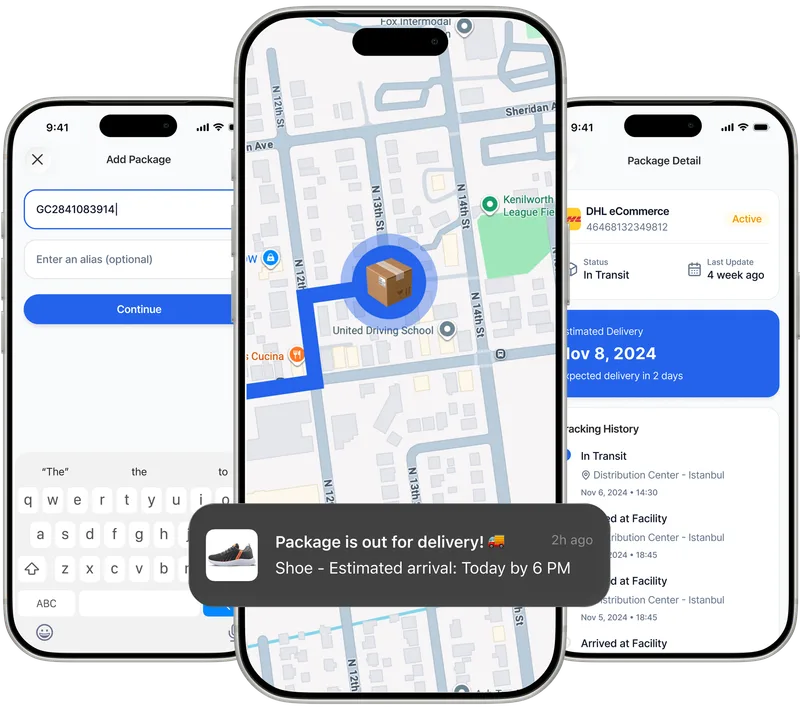
Paxlo unifies tracking for Amazon Shipping and MCF packages alongside all your other carriers in a single mobile app. Instead of switching between Amazon's seller dashboard, MCF reports, and other carrier websites, you see all shipments in one place with real-time status updates.
The app connects to your Amazon seller account securely and pulls shipment data automatically. You don't need to manually upload tracking numbers or track packages across separate dashboards. For MCF orders specifically, Paxlo displays fulfillment status from warehouse pickup through last-mile delivery, with the same transparency you'd get from checking Amazon directly, but without the login friction.
If you're running a modern e-commerce business, you're probably not selling on Amazon exclusively. Paxlo's support for Amazon Shipping and MCF makes sense in that context.
Comparing Amazon MCF to traditional third-party logistics providers reveals important tradeoffs. Amazon excels at speed and cost due to its massive scale and existing infrastructure. Competing 3PLs often offer better customization, dedicated account management, and more flexible packaging options. For many sellers, the answer isn't either-or but both. You might use Amazon MCF for high-volume SKUs and a traditional 3PL for niche products requiring white-glove service.
Paxlo handles this hybrid approach elegantly. All shipments appear in one tracking view, making it easier to compare performance metrics across partners. You can see whether Amazon's speed advantage justifies storage fees, or whether your 3PL is outperforming on customer satisfaction despite higher per-unit costs.
Setting up Amazon tracking in Paxlo takes just a few minutes. Download the app on iOS or Android, sign in, and connect your Amazon seller account through secure OAuth. Paxlo doesn't store your password, just a secure connection token. Once connected, all your Amazon Shipping and MCF shipments pull in automatically.
From that moment on, new orders appear in your Paxlo dashboard as they're shipped from fulfillment centers. You can set delivery alerts, filter by fulfillment method, and access detailed tracking history for each package. If you manage multiple Amazon accounts or seller profiles, Paxlo supports adding all of them, consolidating everything into a unified view.
Consider a typical scenario. You operate a Shopify store using Amazon MCF for fulfillment and also sell on Amazon's marketplace. A customer emails asking where their order is. Without Paxlo, you'd need to log into multiple systems to track that package down. With Paxlo, you pull up the app, search for the order, and share the exact delivery status in seconds. This kind of speed builds customer trust and reduces your support overhead significantly.
Or imagine you're analyzing fulfillment performance. MCF claims to deliver 80% of orders within two days. Is that actually true in your region? Paxlo's historical tracking data lets you run those analyses. You might discover that Amazon delivers faster from your primary fulfillment center but slower from secondary locations. That insight could change how you allocate inventory across the network.
Amazon Shipping and MCF are powerful tools for any seller wanting scalable, cost-effective fulfillment. They handle millions of packages daily and deliver reliably across the United States. But managing them effectively requires visibility. Paxlo provides that visibility through a simple, mobile-first interface that puts tracking data where it matters most, in your hands, whenever you need it. For sellers juggling multiple fulfillment partners and sales channels, Paxlo transforms tracking from a time-consuming chore into an automated advantage.
Open Paxlo on your phone, tap 'Add Account,' select Amazon, and sign in through the secure Amazon OAuth connection. Paxlo never stores your password, just a secure token that lets the app pull shipment data. After connecting, all your Amazon Shipping and MCF orders sync automatically to your dashboard. You can add multiple seller accounts if you manage more than one.
Yes. When you use Amazon MCF to fulfill Shopify orders, those shipments appear in your Amazon seller account with tracking numbers. Paxlo connects to that account and displays all MCF shipments, regardless of where the original order came from. From a tracking perspective, Paxlo shows the full journey from warehouse pickup through final delivery, with the same real-time updates Amazon provides.
Paxlo shows all tracking events that Amazon logs, including order confirmation, pickup from seller or warehouse, in-transit updates, delivery attempts, and final delivery confirmation. For MCF orders specifically, you'll see fulfillment center processing, sortation facility handoffs, and last-mile carrier details. Exception events like delays or delivery failures also appear immediately. Paxlo updates in real-time as Amazon's system processes each event.
Absolutely. Paxlo tracks shipments from Amazon, FedEx, UPS, USPS, and other carriers simultaneously. You can filter by carrier or fulfillment method to see performance metrics like average delivery time, exception rates, and on-time percentage. This makes it easy to answer questions like whether Amazon MCF actually delivers faster than your 3PL, or whether the cost savings justify higher storage fees. Historical data is retained so you can spot trends over weeks or months.
Yes. Amazon Shipping includes Prime-eligible service tiers, and Paxlo tracks all of them. When you ship through Amazon with the Prime badge, Paxlo displays that shipment with the same tracking details as any other Amazon-shipped order. You'll see whether the package meets Prime delivery windows and can monitor performance to ensure your Prime badge stays valid. This is especially useful if you sell across multiple marketplaces and want to ensure consistency.
Paxlo sends you alerts immediately when Amazon logs an exception event like a delay or failed delivery attempt. The app shows the specific reason Amazon recorded, whether it's a weather delay, address issue, or carrier problem. You can then take action, like reaching out to the customer with updated information or contacting Amazon support if the issue requires intervention. Having this visibility in real-time, rather than discovering problems when customers complain, helps you stay proactive instead of reactive.
Download Paxlo and track all your packages in one place. Free, fast, and trusted by 50,000+ users worldwide.