China
Track CRD shipments in real-time with Paxlo. Get instant updates on your China-based parcels from pickup to delivery.
CRD is one of China's expanding regional courier services, operating primarily across major metropolitan areas and secondary cities. The carrier has built its reputation on handling domestic parcels with competitive pricing and reasonable delivery timeframes. While not as massive as the Big Three (SF Express, ZTO, or YTO), CRD serves millions of shipments annually and has become a fixture in China's fragmented logistics landscape.
The company focuses on reliability within its service zones rather than attempting national coverage. This regional approach actually works in customers' favor, as CRD can maintain tighter control over sorting facilities and last-mile delivery in areas where it operates heavily. If you're receiving packages from Chinese retailers or businesses, there's a solid chance at least some of your orders will move through CRD's network.
China's courier market is unlike anywhere else in the world. Unlike the United States where FedEx, UPS, and USPS dominate, China has dozens of significant carriers competing aggressively on price. CRD occupies a middle tier, known for serving e-commerce platforms and small-to-medium enterprises (SMEs) that need cost-effective shipping without sacrificing delivery speed.
The carrier handles everything from business-to-consumer (B2C) shipments to business-to-business (B2B) logistics. Many Alibaba and other marketplace sellers use CRD for orders destined for regional customers. This means if you shop on Taobao, 1688, or other Chinese platforms, CRD tracking numbers will appear regularly in your order history.
CRD's strength lies in quick turnaround times within its core regions. In metropolitan areas like Shanghai, Beijing, and Guangzhou, CRD can often deliver next-day. However, for remote areas or less-developed regions, delivery can stretch to 3-5 days. The carrier maintains sorting hubs in major cities and uses a network of franchised partner stations for last-mile delivery.
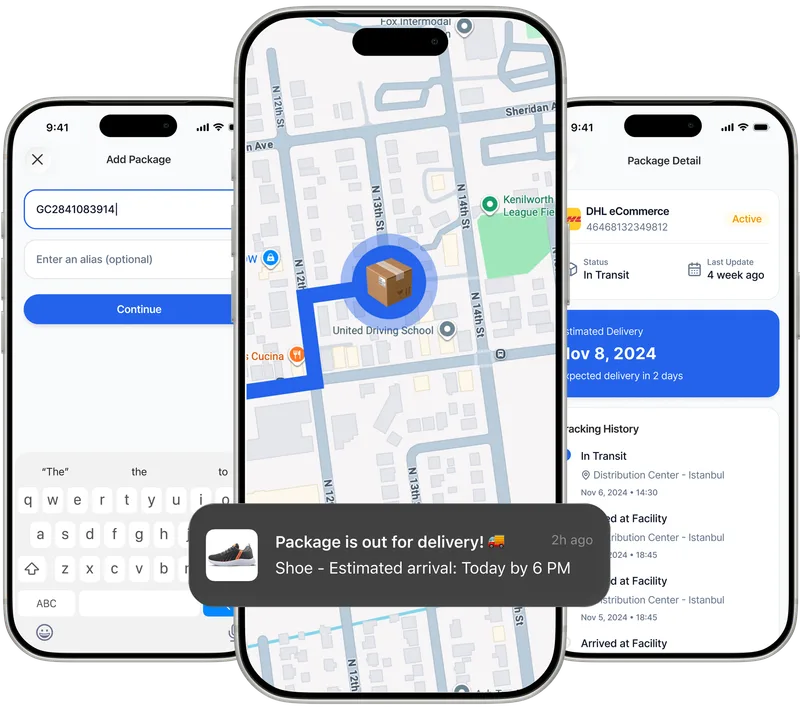
Paxlo integrates directly with CRD's tracking API, pulling real-time status updates the moment your package moves through their system. When you add a CRD tracking number to Paxlo, the app automatically recognizes the carrier and begins monitoring your shipment without requiring manual updates.
The tracking data includes pickup confirmation, sortation facility scans, handoff to delivery partners, and final delivery status. You'll see timestamps and location information at each stage. If there are delays or exceptions, Paxlo notifies you immediately so you're never left wondering about your package.
One advantage of tracking CRD through Paxlo is consolidation. If you receive packages from multiple carriers (CRD, SF Express, ZTO, etc.), the app displays all shipments in one dashboard rather than juggling separate carrier apps or websites. For anyone regularly buying from Chinese sellers or running a business that imports stock, this single-pane view saves significant time.
Paxlo's notification system is particularly useful for CRD shipments crossing into international territory (if the package has a cross-border component) or when delivery is imminent. You'll get an alert when the package is out for delivery, giving you time to arrange access if needed.
CRD tracking numbers typically follow a specific format that helps identify them immediately. The number is usually 12 digits long and may contain a mix of numbers. When you paste a CRD number into Paxlo, the app's intelligent recognition system validates it and connects to CRD's backend to fetch status updates.
If you're seeing a CRD tracking number on your order confirmation from a Chinese seller, enter it directly into Paxlo. The system will start pulling updates within minutes of the carrier assigning the shipment to a delivery route.
Most CRD deliveries follow a predictable pattern. The carrier picks up your parcel from the merchant's location or a consolidation center, transports it to a regional sorting facility, then dispatches it to a local delivery station. From there, a delivery driver takes it to your address. The entire process typically takes 1-3 days for urban areas and 3-7 days for remote regions.
Occasionally, packages sit at sorting facilities briefly due to volume surges or weather conditions. When this happens, Paxlo shows the package as 'In Transit' or 'Waiting for Sorting.' Neither situation indicates a problem, just normal logistics delays. Your tracking updates will resume once the package moves again.
If you buy directly from China, you're likely to encounter CRD regularly. The carrier offers competitive rates that retailers pass along to customers, keeping overall purchase costs down. Unlike premium carriers, CRD prioritizes volume and efficiency over white-glove handling, which works fine for most consumer goods.
For business importers and resellers, CRD's flat-rate pricing structures make it easier to forecast shipping costs. Many 1688 sellers offer CRD as their default carrier, and bulk shipments can benefit from negotiated volume discounts.
If Paxlo can't find your tracking number after 24 hours, verify with the seller that CRD was actually selected as the carrier. Occasionally, retailers change carriers last-minute, and you may receive a different tracking number. Paxlo's search function is comprehensive, but it can only track numbers that actually exist in CRD's system.
CRD delivery times depend entirely on the destination. Within major cities like Shanghai, Beijing, and Guangzhou, most shipments arrive within 1-3 days. For secondary cities and regional areas, expect 3-7 days. Remote rural locations can take 7-14 days or longer. Paxlo's tracking updates will show exactly where your package is at any moment, so you can estimate final delivery based on current location.
CRD primarily handles domestic Chinese shipments. If you're receiving a package from China, the CRD portion of the journey (pickup to handoff at the border or export facility) will be fully tracked in Paxlo. Once the parcel transfers to an international carrier like DHL, FedEx, or EMS for cross-border movement, CRD tracking ends. You'll then need to monitor the international carrier's tracking instead. Paxlo supports hundreds of carriers worldwide, so you can switch to tracking the international portion once the handoff occurs.
CRD uses 'In Transit' to indicate that your package is moving through the courier network but hasn't yet reached the local delivery station. This is completely normal and can last anywhere from a few hours to several days depending on distance and volume. High-volume periods like holidays or shopping festivals can extend this window. As long as you see regular scan updates every 12-24 hours, your package is progressing normally. If updates stop entirely for over 48 hours, that's worth investigating.
Use Paxlo's notifications to set expectations for delivery. If your CRD tracking shows no updates for more than 48 hours, that may indicate a problem. Most normal delays last 24-36 hours. If you notice stalled tracking, contact the original seller immediately with your CRD tracking number. They often have direct relationships with CRD and can inquire with the courier. Paxlo will continue monitoring your shipment and alert you the moment it resumes moving. Rarely, a package truly goes missing, but this is uncommon with CRD unless there was a data entry error in the address.
Absolutely. Paxlo is designed for people who receive lots of packages. Add as many CRD tracking numbers as you need, and the app displays them all in a single unified list. You can sort by status, destination, or date received. This is particularly helpful if you're a reseller importing inventory or a frequent shopper from multiple Chinese retailers. Paxlo also lets you organize shipments into custom folders if you want to group orders by merchant or project.
Paxlo syncs with CRD's API regularly, but there can be a lag of 1-2 hours between when CRD updates their system and when Paxlo reflects those changes. Both sources are accurate, but Paxlo may show slightly older data. This is normal and doesn't indicate an error. You can manually refresh in Paxlo to pull the latest status immediately if you need current information. In rare cases, CRD's systems themselves have delays before displaying new scans, which affects both Paxlo and CRD's own website equally.
Download Paxlo and track all your packages in one place. Free, fast, and trusted by 50,000+ users worldwide.