United States
Track Expeditors shipments in real-time with Paxlo. Get instant updates on your freight and logistics deliveries across the US and globally.
Expeditors International of Washington, Inc. is one of the largest freight forwarding and customs brokerage companies in the world. Founded in 1979, the company operates from over 300 offices across more than 120 countries, making it a critical player in global logistics. Expeditors handles everything from air and ocean freight to ground transportation and customs clearance, serving importers, exporters, and freight forwarders daily.
Based in Seattle, Washington, Expeditors has grown into a publicly traded company (NASDAQ: EXPD) with annual revenues exceeding $9 billion. The firm specializes in managing complex supply chains for companies of all sizes, from small businesses to Fortune 500 corporations. Their expertise spans multiple industries including technology, automotive, pharmaceuticals, and consumer goods.
Expeditors offers a comprehensive range of logistics services that go far beyond basic shipping. Their service portfolio includes:
What sets Expeditors apart is their ability to handle multimodal shipments. If your package travels by air from Asia, transfers to ocean freight, and then moves by truck across the US, Expeditors can manage the entire journey as a single coordinated operation. This integrated approach reduces delays and simplifies tracking.
Expeditors plays a crucial intermediary role in American commerce. While they don't operate their own aircraft or ships, they leverage relationships with carriers worldwide to secure space for client shipments at competitive rates. This allows smaller and mid-sized businesses to access global shipping options that would otherwise be unavailable or prohibitively expensive.
In the US market, Expeditors maintains a significant presence in major port cities like Los Angeles, New York, and Houston, as well as inland hubs like Chicago and Memphis. They process thousands of import and export shipments daily, making them essential to keeping goods flowing in and out of American borders.
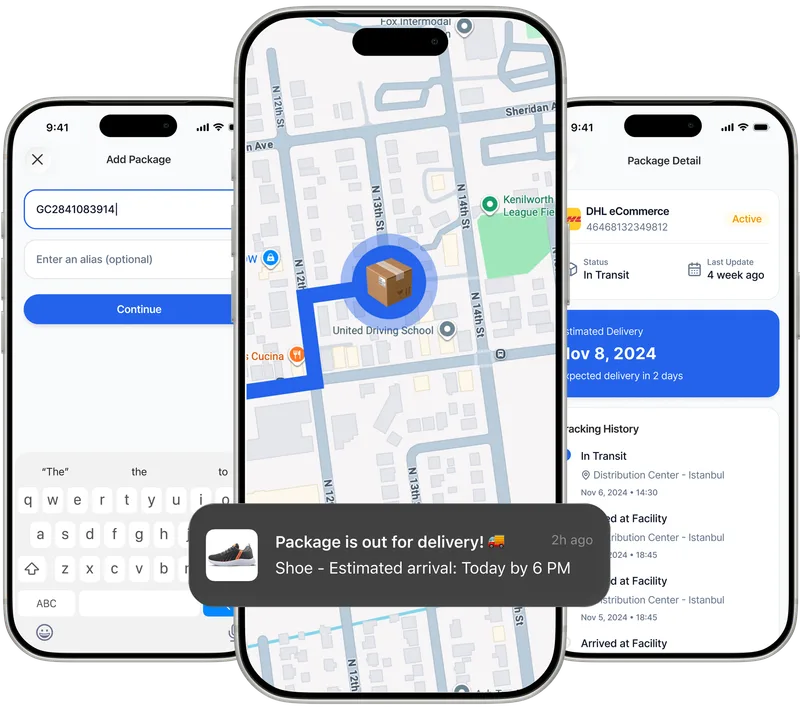
Tracking an Expeditors shipment traditionally meant visiting their website, entering a reference number, and refreshing the page repeatedly. With Paxlo, the process is dramatically simpler. You input your Expeditors tracking number once in the app, and Paxlo automatically pulls updates whenever status changes occur.
The Paxlo app works directly with Expeditors' tracking infrastructure, meaning you receive the same official data they provide, just delivered through a faster, more intuitive interface. Instead of bouncing between multiple carrier websites and apps, you can consolidate all your shipments in one place.
For businesses managing supply chains, Paxlo eliminates the friction of shipment visibility. Procurement managers, logistics coordinators, and customer service teams all benefit from having one central tracking hub rather than managing individual carrier accounts.
Expeditors handles such diverse shipment types that their tracking data varies significantly. With Paxlo, you can monitor:
Because Expeditors operates globally, tracking status messages might reference international ports, customs brokers, or partner carriers. Paxlo translates this complexity into clear, actionable updates that make sense regardless of your shipment's complexity.
Expeditors uses several identifier formats depending on the shipment type. The most common is their reference number, which is typically a 7 to 10-digit code provided in your quote or shipment confirmation. House bills of lading (HBLs) are also valid identifiers, particularly for freight shipments. Master bills of lading (MBLs) work too if you're tracking consolidated shipments.
When you enter any of these numbers into Paxlo, the app recognizes the format and retrieves the correct tracking data. This saves you from having to decode which reference type you actually have, which is a common source of confusion when dealing with international freight.
Understanding what Paxlo will show you at different stages helps you better manage expectations. For air freight, you'll typically see updates around pickup, delivery to the airport, departure, arrival at destination, and final delivery. Ocean freight moves slower but follows a similar pattern: pickup, port loading, vessel departure, port arrival, customs clearance, and final delivery.
LTL ground shipments update more frequently, often showing pickup, in-transit scans at hub facilities, and final delivery within 1-5 days. International shipments add a customs clearance phase where the shipment may pause for documentation review. This is normal and doesn't indicate a problem, just bureaucratic timing.
Logistics professionals choose Paxlo because it respects their time. Instead of logging into separate portals for each carrier, they manage everything from one app. Notifications alert you to delays, clearance holds, or delivery confirmations immediately, eliminating the need to proactively check statuses.
For customer-facing businesses, Paxlo integration means you can provide clients with accurate shipment visibility without building custom tracking portals. You simply share tracking links or numbers, and customers can monitor progress independently through Paxlo.
The process takes less than two minutes. Download Paxlo from the iOS App Store or Google Play, open the app, and tap the option to add a new shipment. Select Expeditors from the carrier list, then enter your tracking number or reference. Paxlo automatically fetches current status data and adds the shipment to your tracking dashboard. Enable push notifications so you receive alerts as your shipment progresses.
You can track as many Expeditors shipments as needed simultaneously. The app syncs across all your devices, so whether you check status on your phone or tablet, you always see current information. For team usage, you can share specific tracking links with colleagues or clients without them needing to download anything.
Both work perfectly in Paxlo. Whether you're tracking a full container load (FCL) or consolidating shipments in less-than-container loads (LCL), enter your bill of lading number and Paxlo retrieves the tracking data. LCL shipments may show master bill and house bill tracking, and Paxlo displays both. You'll see container numbers, port schedules, and delivery information alongside the standard tracking milestones.
Download Paxlo and track all your packages in one place. Free, fast, and trusted by 50,000+ users worldwide.