REDCLOUD has emerged as one of China's most dynamic express delivery services, built specifically for the demands of modern e-commerce. Unlike legacy carriers that struggle with speed and technology integration, REDCLOUD was designed from the ground up to handle high-volume parcel delivery with industry-leading efficiency. The company operates across China's vast geographic territory, connecting tier-1 cities to remote regions with the same operational excellence.
The carrier runs one of the largest automated sorting networks in Asia. Their facilities use AI-powered routing systems and robotics to process packages at speeds that traditional logistics companies simply cannot match. What makes REDCLOUD different is their commitment to real-time visibility, which aligns perfectly with how modern consumers expect to track their packages.
REDCLOUD operates within China's highly competitive 'four pillar' express market, competing alongside ZTO, YTO, and STO for dominance in domestic parcel delivery. The company has captured significant market share by focusing on reliability rather than being the cheapest option. Since its expansion phase in the last decade, REDCLOUD has grown from a regional player to a national carrier handling millions of packages daily.
The carrier is particularly strong in e-commerce integration, maintaining partnerships with Alibaba ecosystem platforms, JD.com, and emerging social commerce players. This deep integration means REDCLOUD handles traffic spikes during shopping festivals like Singles' Day and 618 with minimal service disruption, a critical advantage in China's fast-paced online retail environment.
REDCLOUD's last-mile delivery network is particularly impressive. The carrier employs over 100,000 delivery personnel and maintains thousands of collection and distribution points. Their hub-and-spoke model ensures that packages move efficiently from origin to destination, with multiple daily pickup windows to accommodate business hours and consumer preferences.
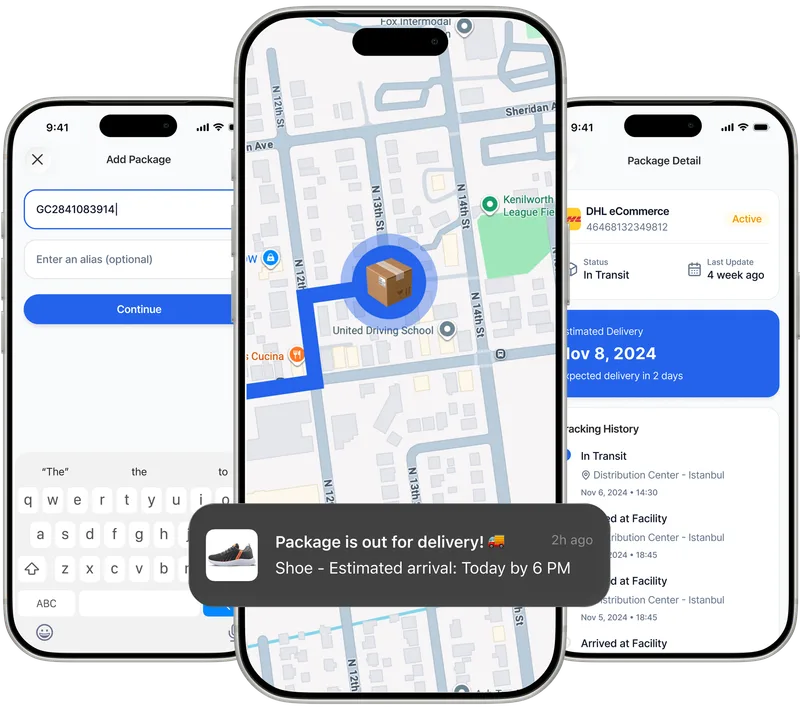
Paxlo connects directly to REDCLOUD's tracking infrastructure, pulling real-time status updates the moment your package moves through the network. When you enter a REDCLOUD tracking number into Paxlo, the app immediately retrieves detailed scan events: pickup confirmation, sorting facility arrivals, handoff to delivery partners, and final delivery timestamps.
The integration goes beyond basic tracking numbers. Paxlo decodes REDCLOUD's complex handling codes and location data, translating them into plain language that explains where your package is right now and when you can expect delivery. This matters because REDCLOUD processes packages through 10+ handling points on average, and most standard tracking apps only show cryptic facility names.
REDCLOUD's official app works fine for basic tracking, but Paxlo offers advantages that matter in real life. First, you can track REDCLOUD packages alongside shipments from other carriers, all in one app. If you've ordered from multiple shops using different couriers, you're not juggling five different apps.
Second, Paxlo's notifications are actually useful. Rather than generic 'shipment updated' messages, you get context about what changed and what to expect next. The app learns regional delivery patterns for REDCLOUD, so it can predict delays before they happen and flag unusual activity.
Third, Paxlo stores your complete tracking history with timestamps and location data. If a REDCLOUD package arrives damaged, goes missing, or you need proof of delivery for a return, you have a timestamped record that's accepted by merchants and REDCLOUD customer service as evidence.
REDCLOUD's on-time delivery rate consistently exceeds 95% for standard packages, and they guarantee next-day delivery for express shipments in metro areas or your money back. The carrier has invested heavily in automation specifically to reduce human error and bottlenecks that cause delays.
Their customer service handles complaints through WeChat, Alipay, and phone channels. Response times are typically 2-4 hours for damage claims. Paxlo users have an advantage because the app timestamps every scan event, making it much easier to prove when REDCLOUD had your package and establish liability for damage or loss.
During peak seasons, REDCLOUD sometimes struggles with delivery person availability in remote areas, but their price point reflects this reality. The carrier is transparent about service level expectations, and their tracking system (especially through Paxlo) makes it clear when to expect delivery in less-connected regions.
Once you install Paxlo on iOS or Android, you can start tracking REDCLOUD packages immediately. If the carrier sent you a tracking number via SMS, email, or order confirmation, just paste it into Paxlo's search field or use the camera feature to scan the barcode from your receipt. The app auto-detects that it's a REDCLOUD shipment and pulls live data from their tracking system.
You can also set up automatic tracking if you order frequently from shops that use REDCLOUD. Many e-commerce platforms in China now integrate with Paxlo, feeding your order details and tracking numbers automatically. This removes the friction of manually entering tracking information and ensures you never miss an important update.
Standard delivery takes 2-5 business days depending on origin and destination. Major cities like Shanghai to Beijing typically see 1-2 day delivery. Remote areas in Xinjiang or Tibet may take 7-10 days. REDCLOUD's next-day and same-day services are available in metro zones but cost more. Paxlo shows the specific service level for your shipment when you add the tracking number, so you know which timeline applies.
It depends on the shipment stage. If the package is still at the origin facility (within 24 hours of pickup), you can call REDCLOUD's customer service or use their app to request a change. Once it reaches a regional sorting hub, address changes are usually impossible without canceling and reordering. Paxlo's timeline shows you exactly when the package moves between facilities, helping you understand if you still have time to modify the address before it's too late.
Occasional delays happen, especially during sorting operations in regional hubs where packages may sit 12-24 hours before moving. However, if your Paxlo tracking shows no movement for more than 48 hours, contact REDCLOUD immediately through their WeChat account or 400 hotline. Have your Paxlo screenshots handy, as they provide proof of when the package arrived at that facility. The carrier can investigate whether the package is actually delayed or if a scan was missed.
REDCLOUD has expanded international coverage to Southeast Asia, but limited visibility exists once packages leave China. Paxlo tracks your shipment through China's domestic network with full detail, showing when it reaches the China-border facility. For the overseas leg, tracking becomes sporadic depending on the destination country's carrier integration. Paxlo alerts you when your package enters international shipping and provides what information is available from the receiving carrier.
REDCLOUD uses cryptic codes that confuse most people. Codes like '已揽收' mean the package is picked up, '已发出' means it has departed a facility, and '已送达' means delivery is complete. Paxlo translates these automatically into readable English: 'Picked Up', 'In Transit', 'Out for Delivery', and 'Delivered'. This saves you from having to use Google Translate on every tracking update.
Paxlo doesn't file claims for you, but it gives you the evidence you need to win them. The app timestamps every scan event and saves facility location data, proving exactly when and where REDCLOUD had possession. When you contact REDCLOUD with a loss claim, provide your Paxlo screenshots showing the tracking history. REDCLOUD typically requires proof that the package was your responsibility and then left their care, which Paxlo clearly documents.
Download Paxlo and track all your packages in one place. Free, fast, and trusted by 50,000+ users worldwide.